Do Veneers Damage Your Teeth?
What is actually removed, whether decay forms beneath them, and the one thing that decides both.
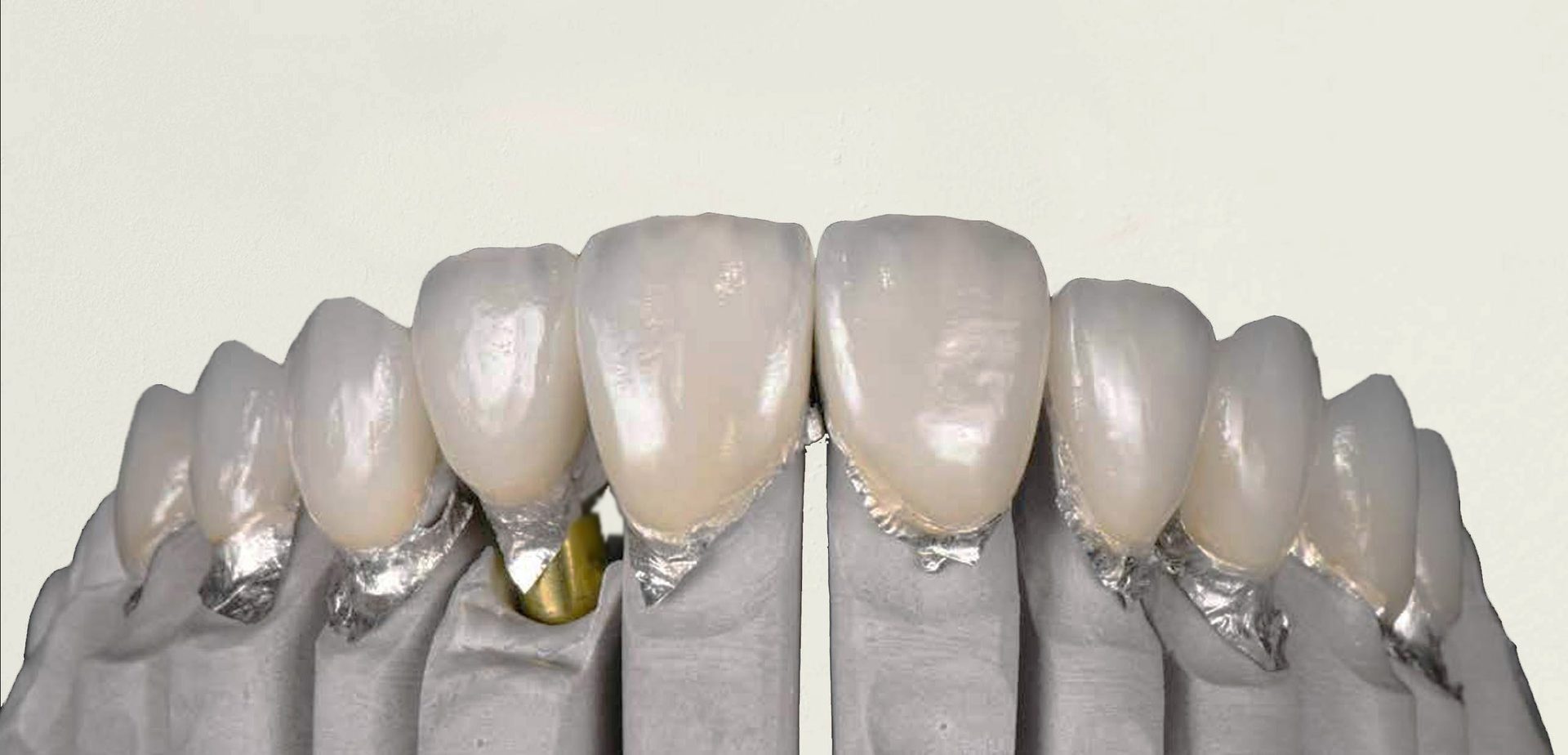
In short
Veneers can, and the variable is how much enamel is removed and where. Decay underneath is uncommon, and the margin is what decides it.
They can, and the honest answer depends on something you are allowed to ask about before anything happens: how much enamel is removed, and from where. A veneer bonded to enamel behaves differently from one bonded to the dentine underneath it. Decay beneath a veneer is uncommon, and it is worth explaining why.
What is actually removed
Enamel is thinner than most people picture. On the front of a tooth there is usually enough of it to accept a conventional veneer if the reduction is kept shallow, but near the gum the enamel is thin to begin with. That is the first place a preparation runs out of it and reaches the dentine beneath.
This matters more than the brand or the material, because ceramic bonded to enamel holds better than ceramic bonded to dentine. Dentine bonding is less durable and carries a higher risk of leakage at the join. So when someone asks whether veneers damage teeth, the useful version of the question is how much was taken, and whether what remains is still enamel.
Do teeth decay underneath?
Rarely, as a reported cause of failure. In a systematic review covering around 6,500 porcelain veneers, estimated survival at ten years was about 95%. When decay alone was counted as the cause of failure, survival was about 99%. That tells us decay was an uncommon reported reason for a veneer to fail in these studies. It does not tell us that decay beneath a veneer is impossible, because a lesion can be found and treated without the veneer itself being recorded as a failure.
Decay can develop around the margin, the junction where the ceramic meets the tooth. Over time, defects in that junction may allow plaque to accumulate and increase the risk of decay. But the margin is only part of the picture. Oral hygiene, your own susceptibility to decay, and the quality of the bonding all matter, which is why the margin deserves careful examination rather than all of the blame.
What you can ask before you agree to anything
Three questions, and any dentist should be able to answer them: how much enamel are you removing, will the preparation stay in enamel, and where will the margin sit. The answers come out of the diagnosis, not out of a price list. They help you understand how the dentist plans to preserve your enamel, achieve a reliable bond, and protect the tooth over time.
Two smaller things worth knowing. Some patients experience temporary sensitivity after preparation, although this does not happen to everyone. And the margin is a junction like any other in the mouth, so it needs cleaning properly rather than carefully avoiding it.
If you already have veneers and are concerned about what is underneath, have the restorations and their margins examined rather than judging them by appearance alone. And if you are still deciding, ask how much enamel is coming off before you ask about the shade.