Veneer replacement · Dubai
The second set is a harder case than the first.
Replacing existing veneers or crowns is not the same job as making them. The tooth underneath has already been prepared once, the gum has a history, and whatever caused the first set to fail is usually still there. So nothing here begins with the ceramic. It begins with finding out what actually happened.
In short
Veneers and crowns can be replaced, and in Dubai this is common work. The part that decides the outcome is what happens before removal: whether the margins are leaking, how the gum has responded, what condition the prepared tooth is in, and whether the bite is loading the restorations evenly. Where a restoration can be kept or repaired instead of replaced, that is the better answer and you will be told so.
Before you book anything
Five things you can check in your own mouth.
Most people arrive knowing only that something looks wrong, without being able to say what. These are the five markers a clinician looks at first. Four of them you can see in a mirror, in daylight, in two minutes.
- 01
The line at the gum
Look for a dark or grey seam where the veneer meets the gum. A margin that has begun to leak shows first as a shadow, long before anything hurts.
- 02
The gum itself
Redness, puffiness or bleeding around a few teeth and not the rest. Gum that is unhappy around specific restorations is usually reacting to their edge, not to your brushing.
- 03
How they meet
Close slowly. If one side touches first, if a particular edge keeps chipping, or if you wake with tight jaw muscles, the load is not shared evenly. This is the finding that most often explains the rest.
- 04
Behaviour in daylight
Natural enamel changes with the light. Restorations that read flat, chalky or uniformly opaque outdoors are reflecting light differently from the teeth around them.
- 05
Sameness
Identical width, identical brightness, identical shape across every tooth. Real teeth are not identical, and the eye reads uniformity as dentistry even when it cannot say why.
If you recognised the third one, bring it up first. A bite that distributes load unevenly is the single most common reason good ceramic does not survive, and it is the finding most often missed.
One failed case, in records
Eight units, replaced.
Eight veneers that had stopped working, and the same mouth after. Shown with the patient’s written consent.
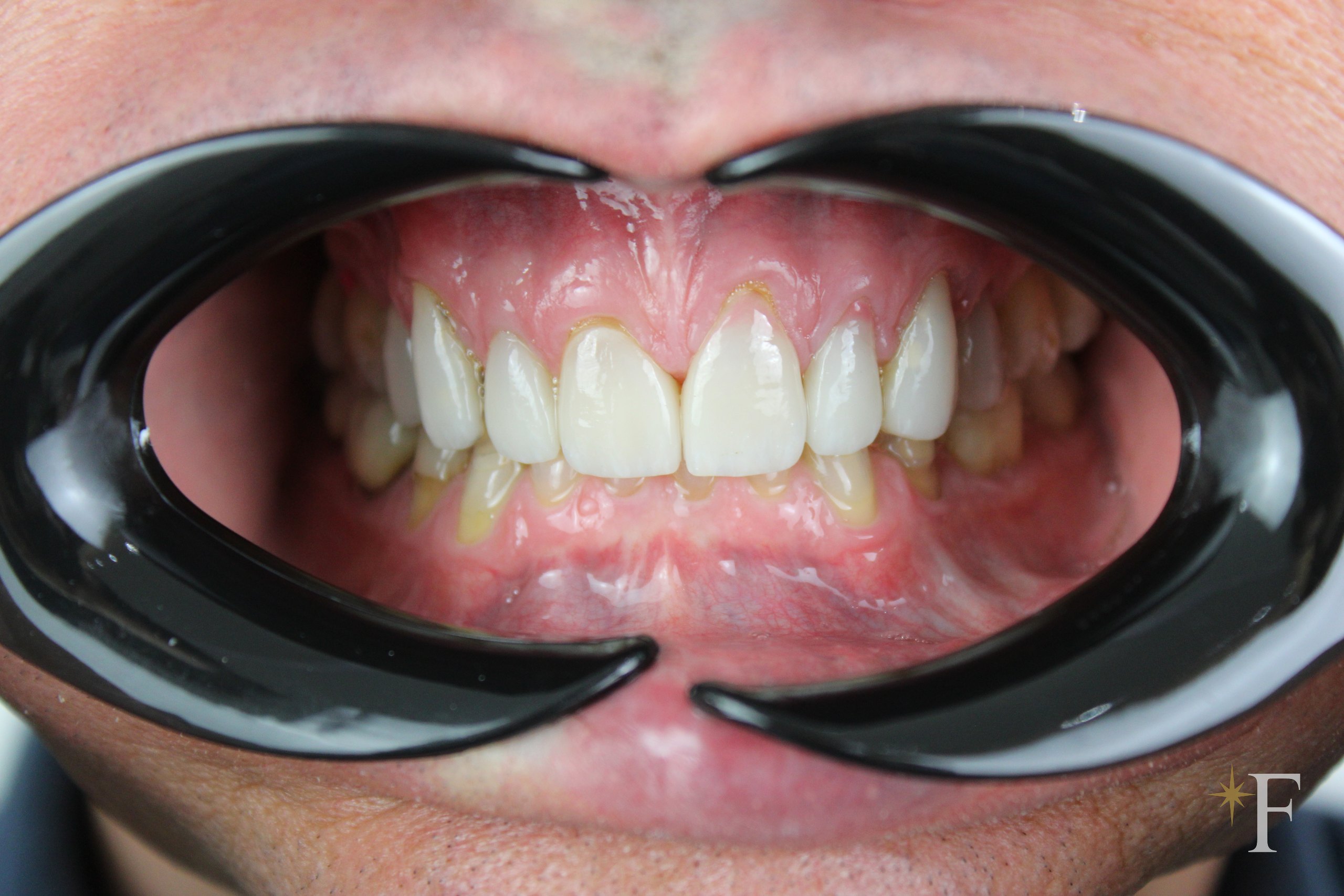
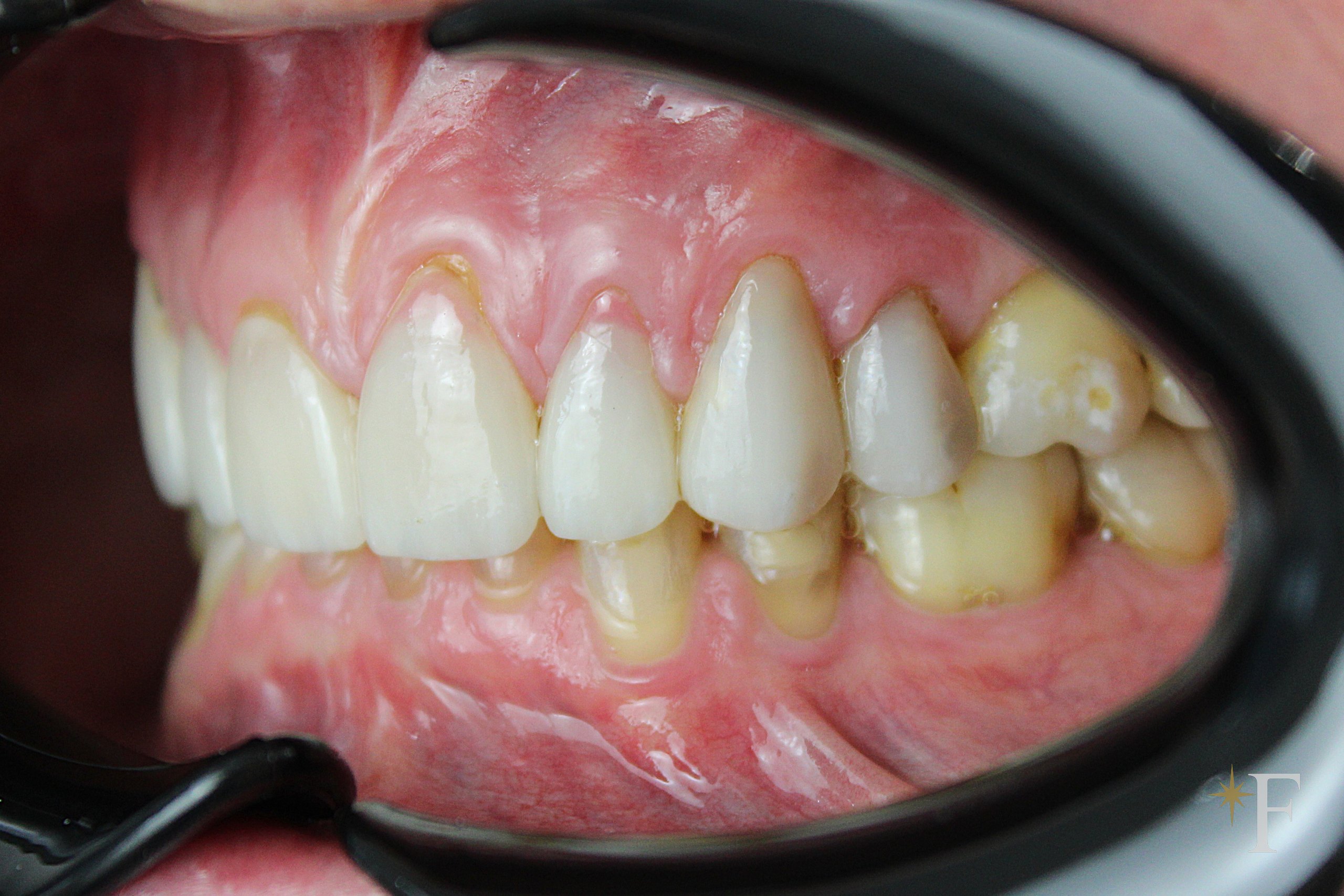
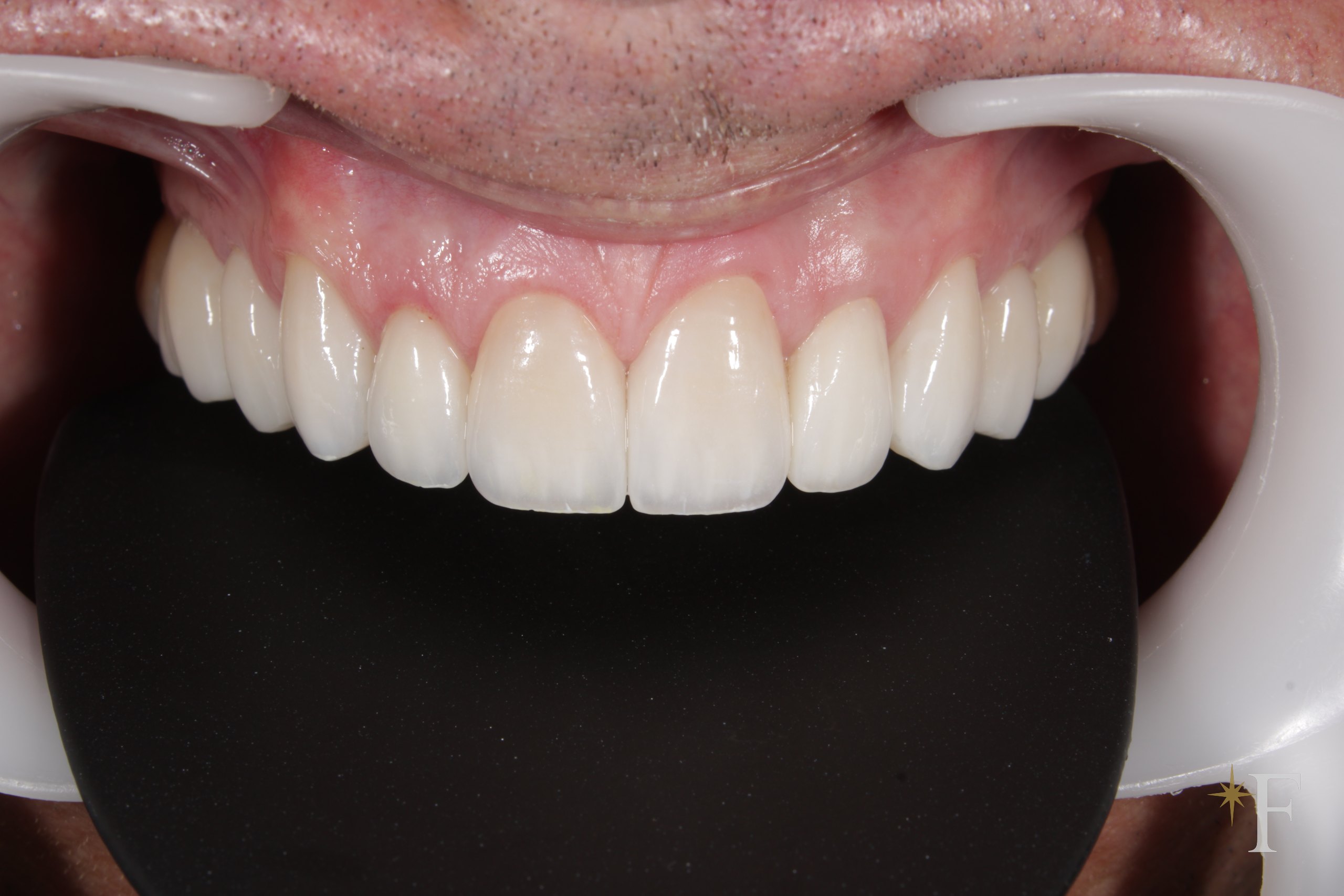
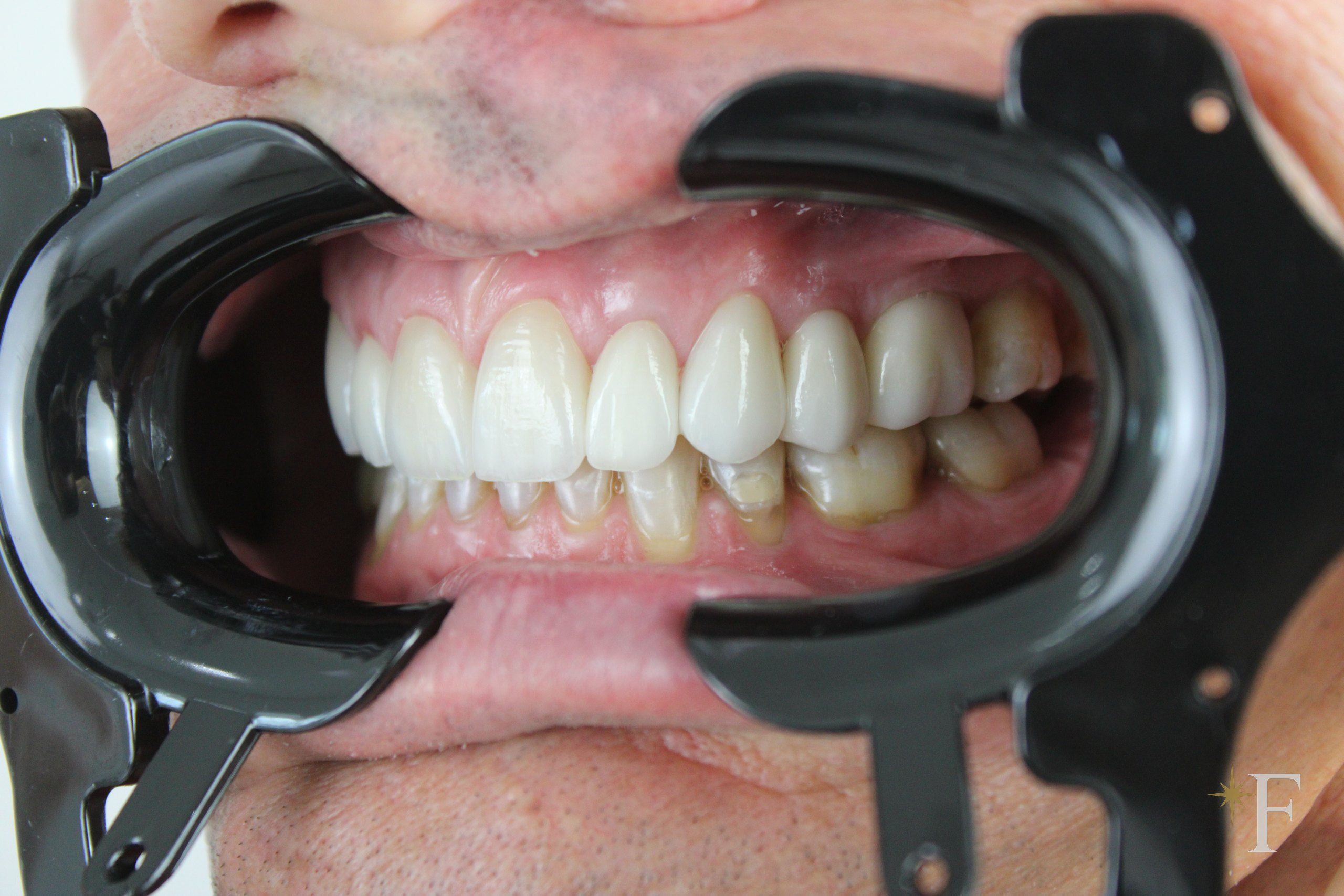
Not a verdict on anyone’s work. Findings. What they change is the order: margin and load are corrected first, because new ceramic over the same conditions reaches the same end. Individual results may vary from one patient to another.
Why restorations fail
Ceramic rarely fails on its own.
Modern ceramic is strong. When a restoration chips, debonds, discolours at the edge or irritates the gum, the material is usually reporting a problem rather than causing one.
Behind this section: five peer-reviewed papers on occlusion and mandibular function.

The margin
Where the restoration meets the tooth. If that seam is not sealed, the first sign is a dark line rather than pain.
The load
How your teeth meet, and what happens when the jaw moves sideways. Restorations placed over a bite that was never assessed carry forces they were not built for.
The gum's space
Every tooth needs a certain height of tissue between gum edge and bone. A restoration that intrudes on it inflames gum that no cleaning will settle.
Time
Bonding ages, gums recede, teeth move. Some work simply reaches the end of a normal life, which is a different conversation from failure.
Not everything needs replacing
The cheapest good answer is the one that keeps what works.
A chipped edge can sometimes be repaired. A sound restoration sitting beside a newer, brighter one is a matching problem, not a failure.
Every restoration removed is enamel you do not get back. Where keeping one is defensible, keeping it is the recommendation, even when replacing all of them would be the larger treatment.
The order
Health, then function, then appearance.
What is unhealthy beneath the old work is treated first. What is loading it unevenly is corrected second. The new ceramic is last, because it is the only step that cannot compensate for the two before it.
One case
Replaced, and not announced.
The patient whose records appear above. Existing restorations removed, the bite corrected, and new handmade ceramic built to the result of that diagnosis. Shown with his written consent.


Individual results may vary from one patient to another.
Questions
Questions about veneer replacement in Dubai.
Can veneers be replaced?
Yes. Existing veneers and crowns can be removed and replaced, and this is routine work. What is not routine is the assessment beforehand: the tooth underneath has already been prepared once, so the condition of that tooth, the gum and the bite decide what is actually possible.
Does replacing veneers damage the teeth further?
It can, which is why the assessment matters more than the replacement. Some enamel was removed the first time, so there is less to bond to and less margin for error. Where a restoration can be kept or repaired instead, that is the better answer, and it is offered.
Can one single veneer be replaced, or must all of them be?
Often one is enough. A single mismatched tooth is a common reason people come in, and matching one new restoration to existing neighbours is a harder technical problem than making ten at once, not an easier one.
How do I know whether mine need replacing at all?
Age alone is not a reason. The reasons that matter are leaking margins, an unhappy gum, a bite that is loading them unevenly, or a tooth that has changed underneath. Some restorations look dated and are perfectly sound; some look acceptable and are failing quietly.
What if the tooth underneath has decay or has broken?
That is found at the diagnosis, not discovered halfway through. Where the tooth beneath has decay, a crack or a failed root treatment, that is treated first. Aesthetics are the last step, never the first.
Why does the bite keep coming up?
Because it is usually the cause rather than a detail. Restorations that chip, debond or keep failing are often carrying load they were never designed to carry. Replacing them without correcting that simply restarts the clock. How the bite works is the subject of Dr. Fabbro's five peer-reviewed papers.
How long does replacement take?
It depends on what the diagnosis finds. Where the teeth and gums beneath are sound, it can be a short sequence. Where the bite has to be corrected first, the case is planned in phases and you will know the order before anything begins.
Do you need to see the work in person?
Yes. Photographs are useful for a first conversation, and for patients abroad the first assessment can be a private video consultation. But margins, gum response and the bite cannot be judged properly from an image.
Bring what you already have. It will be assessed honestly.
One appointment tells you what is actually happening under the work you have, and what it would take to put it right. It commits you to nothing else.